
Indian equity benchmark indices Sensex and Nifty rallied for the second consecutive session, driven by strong buying in IT firms and a significant boost from Tata Group's retail arm Trent following its impressive September quarter earnings.

Indian automakers like Tata Motors Passenger Vehicles and Mahindra & Mahindra are experiencing increased semiconductor procurement costs due to surging demand from AI data centres. This global shift is tightening chip supplies for conventional automotive applications, forcing manufacturers to pay premiums and build inventories to maintain production, with concerns about prolonged supply constraints and rising prices for memory chips.

A new study by The Energy & Climate Initiative Society (ENCIS) predicts that AI adoption in India's power generation sector will surge from 35% to 65% by 2030, becoming a core operational capability. The study highlights that nearly seven out of ten professionals see power generation as offering the best opportunity for efficiency gains through AI, driven by India's expanding digital infrastructure and significant investments from energy giants. Predictive asset management and proactive maintenance are identified as key areas for AI application, with efficiency being the primary driver for AI investments.

India presented its 'Sundays on Cycle' initiative at the UN climate summit in Antalya, advocating for citizen involvement in combating climate change. The program, part of the Fit India Movement, encourages regular cycling and has seen significant participation, with UN Climate Change leaders suggesting it as a replicable global model.

Samajwadi Party chief Akhilesh Yadav has launched an online initiative called 'Akhilesh Sun Rahe Hain' to directly interact with voters ahead of the 2027 Uttar Pradesh assembly elections. The platform allows citizens to submit their problems and suggestions, receiving personalised responses from Yadav on how his party would address these issues if voted to power. The initiative has seen significant participation, particularly from young people, with employment and education being major concerns. It aims to move beyond traditional political outreach by fostering direct communication and understanding grassroots issues.
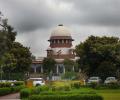
The Supreme Court on Friday reaffirmed its March 11 verdict, stating that a parent's salary or income from PSU or private sector employment cannot be the sole factor for creamy-layer exclusion for OBCs. The court also rejected the Centre's plea for prospective application of the judgment, clarifying that it applies to the parties involved and will not reopen concluded selections or promotions.

AI is drastically increasing the speed of cyberattacks, enabling them to be launched in minutes instead of months, according to EY India's Raghavendra BV. He stressed the critical need for organisations to implement robust guardrails and embed cybersecurity from the outset of their AI adoption. Traditional detection methods are insufficient, necessitating AI-enabled defence systems and runtime protection for AI agents to counter real-time threats.

Indian benchmark equity indices, Sensex and Nifty, extended their winning streak for a third consecutive day, driven by sustained foreign institutional investor (FII) inflows and a dip in global crude oil prices. The Sensex closed above 81,900, while the Nifty settled near 25,300, despite mixed global cues.

IBM Chairman and CEO Arvind Krishna details the company's substantial annual investment in India and its global USD 10 billion commitment to quantum computing over the next five years. He addresses the potential for AI to displace 10-20 per cent of jobs, particularly in the BPO sector, while also highlighting India's significant opportunity in the AI ecosystem. Krishna urges India to accelerate AI adoption, scale existing tech initiatives, and build its semiconductor manufacturing, advocating for a light-touch approach to AI regulation and emphasizing critical thinking in an AI-driven economy.

The Union finance ministry has constituted a high-level committee, chaired by former Central Vigilance Commissioner Suresh N Patel, to recommend structural, regulatory, and legislative reforms for India's banking sector, aiming to make banks globally competitive and support the financing needs of a developed economy.

NavIC is India's independent, standalone navigation satellite system aimed at providing position, navigation and timing (PNT) services across India and around 1,500 km beyond the country's landmass.
An Indian defence engineering company, Paras Defence and Space Technologies, has partnered with US-based BroadPak Corporation to accelerate the development of advanced semiconductor packaging capabilities in India. This collaboration aims to establish a facility for heterogeneous integration and 3D packaging, focusing on critical technologies for AI, high-performance computing, and defence applications.
Indian stock markets, led by the Sensex and Nifty, have extended their robust rally for a fourth consecutive day, buoyed by a significant correction in crude oil prices, a resurgence of foreign institutional investor inflows, and strong domestic Q2 earnings.

India does not need to win the model race to win the AI era. It needs to be the country that cannot be switched off, can be trusted by its citizens, and is useful to the rest of the world, asserts Rajeev Srinivasan.
Indian benchmark indices Sensex and Nifty ended marginally lower in the special Diwali Muhurat trading session, snapping a seven-day rally amid profit-taking by investors. Despite a positive start, the Sensex dipped 28.62 points to 80,999.40, and the Nifty declined 43.95 points to 24,986.40.

India's central cyber security agency, I4C, has issued a critical warning to banks, NBFCs, and fintech firms regarding a surge in financially motivated cyberattacks leveraging artificial intelligence agents. These AI-driven attacks enable hackers to compromise systems and execute fraudulent transactions at machine speed, making investigations complex due to record deletion. The advisory, issued in collaboration with CERT-In, urges financial institutions to implement robust security measures, align with CERT-In's blueprint, and report incidents promptly to mitigate the escalating threat.

The BJP has strongly criticised Congress leader Rahul Gandhi for his comments on the Indian economy made at Columbia University, where he described India as facing an "economic disaster." The ruling party accused Gandhi of engaging in "anti-India propaganda" and repeatedly portraying the nation negatively on foreign soil, despite global agencies recognising India as a fast-growing economy. BJP leaders highlighted India's economic progress and questioned Gandhi's motives for undermining the country's image internationally.
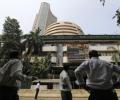
Analysts predict that the US midterm election results, which saw Democrats gain control of Congress, will primarily influence Indian markets through changes in global financial conditions, trade policy expectations, and geopolitical developments, with a keen focus on the US administration's actions in West Asia and their potential impact on crude oil prices.

Tata Trusts Chairman Noel Tata has voiced concerns that a proposed public listing of Tata Sons could fundamentally alter the group's traditional business philosophy, potentially leading to profits being prioritised over philanthropy. This comes amid an ongoing dispute between Tata Trusts and the Tata Sons board regarding the holding company's ownership structure and leadership.
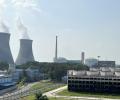
Ushering in reforms, Union Finance Minister Nirmala Sitharaman on Saturday proposed to open up the nuclear power sector for private players and announced a Rs 20,000 crore Nuclear Energy Mission for research in the field, with an aim to set up five small and modular reactors by 2033.
IT services firm Tech Mahindra has announced a collaboration with AI coding platform SpaceXSI to help global enterprises modernise legacy applications, accelerate software delivery, and improve developer productivity through AI-assisted engineering across the software lifecycle. The partnership aims to embed AI intelligence across the software development lifecycle for better business outcomes, focusing on sectors like technology, telecommunications, and banking.
Atomic Energy Commission Chairman Ajit Kumar Mohanty announced that India's private sector is projected to invest Rs 7.5 lakh crore and contribute 30 GW towards the nation's goal of achieving 100 GW nuclear power capacity by 2047. This marks a significant policy shift, facilitated by the SHANTI Act, encouraging private participation in nuclear energy beyond the traditional public sector model. The country is also exploring Small Modular Reactors (SMRs) for industrial needs and advancing its three-stage nuclear power programme, leveraging its substantial thorium reserves.

Indian stock market benchmark indices Sensex and Nifty rallied significantly in early trade, driven by robust foreign fund inflows, better-than-expected Q2 results, and a sustained moderation in crude oil prices. The 30-share BSE Sensex jumped 1,097.33 points, while the 50-share NSE Nifty rallied 274.30 points. Track Sensex, Nifty on November 11.

India is proposing the Data Empowerment and Protection Architecture (DEPA) for AI Training, a national framework designed to enable startups, researchers, and companies to train AI models using data from hospitals, banks, and public agencies while ensuring privacy and security. This initiative aims to unlock significant AI-driven value for India's GDP by 2030.

Former US Secretary of State Antony Blinken stated that the US must respect India's right to self-defence and maintain a zero-tolerance policy towards terrorism, highlighting the "fundamentally different" nature of Washington's relationships with New Delhi and Islamabad. He described US-India ties as global and strategic, while US-Pakistan relations are regional. Blinken also touched upon cooperation in emerging technologies, India's ties with Russia, rapid global changes, US domestic politics, and the West Asia conflict, advocating for a two-state solution.

'Pranab-ji, had developed serious differences with P Chidambaram, and on one occasion, in 2010, I think, after expressing his frustration, he shocked me with the suggestion that perhaps it was time for a change at the top, which I understood as a hint of his long-held desire to become prime minister.'
India is ranked as a "Rising Contender" in AI by Boston Consulting Group (BCG), indicating high readiness but lower disruption exposure. The report highlights India's strength in its large pool of AI specialists and IT-services workforce. While not yet an "AI Pioneer," India is leveraging its talent advantage, with government initiatives like Yuva AI for ALL and IndiaAI FuturesSkills aiming to upskill citizens and broaden access to AI education. The report emphasizes that execution and talent deployment are crucial for economies to gain ground in AI.

Homegrown software company Zoho has launched Zia Chat, a unified AI interface designed to streamline business operations across various functions. Alongside this, Zoho announced its entry into vertical SaaS with seven industry-specific applications for sectors like retail, automotive, healthcare, and education, reinforcing its position as a 'Swadeshi' alternative to global tech giants.

The Prince and Princess of Wales, Prince William and Kate Middleton, are set to undertake their first joint overseas visit since the Princess announced her cancer diagnosis, travelling to Mumbai for the 2026 Earthshot Prize awards ceremony and other engagements in India.

In a life fully and adventurously lived, Bunker Roy creatively defied many conventions and opened paths for subsequent generations to follow. Long before the term 'social entrepreneur' was coined, Bunker innovated empowering social processes and village-level production systems that dramatically improved the lives of tens of lakhs of people not only across India but in 96 other countries, notes Rajni Bakshi.

Indian equity benchmarks Sensex and Nifty extended their losses for a third consecutive session, with the Sensex declining 460.30 points and the Nifty dropping 123.70 points, primarily due to surging crude oil prices driven by escalating tensions in West Asia and weak global cues.

Indian benchmark stock indices, Sensex and Nifty, rebounded significantly after a four-day losing streak, driven by value buying and strong performance in metal, telecommunication, and healthcare sectors.

A Crisil report indicates that India is the world's fastest-growing polymer compound market, contributing 13% to the global industry. Driven by increased manufacturing in automotive, electronics, and infrastructure, the domestic sector is projected to reach USD 16.5 billion by FY2031, with significant demand from various pipeline and cable segments.
Indian stock markets witnessed a significant rally, with the Sensex soaring 905 points and the Nifty topping 22,900, primarily driven by strong buying in banking and FMCG shares, coupled with easing crude oil prices and a US Fed rate pause.

Foreign portfolio investors (FPIs) significantly increased their buying in Indian equities during the first half of August, with financial services attracting the largest inflows, reversing previous outflows. The IT sector also continued to see strong interest from overseas investors, driven by a reassessment of valuations and the role of Indian IT firms in AI deployment.

Prime Minister Narendra Modi met India's medal winners from the recently concluded Asian Para Games, praising their achievements and struggles as an inspiration for the country. India achieved its best-ever performance at the Games, securing 114 medals. Modi highlighted the government's commitment to supporting sports talent and improving the sporting ecosystem, urging athletes to aim for the 2028 Los Angeles Paralympics.

Indian benchmark indices, Sensex and Nifty, closed largely unchanged after a volatile trading session, influenced by persistently high crude oil prices, selling pressure in major bank stocks, and investor caution ahead of the US Federal Reserve's policy decision.

While remaining cautious of the unpredictability of a bruised Trump administration, New Delhi, and other world capitals, could go slow on the investment pledges made to stave off tariffs.

Global companies like LG Electronics, Smartworks, Microsoft, and HCL Technologies lauded Uttar Pradesh's investor-friendly policies, infrastructure, and talent at the GCC Innovation Summit 2026. They shared positive experiences, highlighting the state's swift decision-making and commitment to fostering a conducive environment for Global Capability Centres, leading to significant investments and job creation.

Union Finance Minister Nirmala Sitharaman announced the government's plan to establish a high-powered committee to examine reforms for the banking sector, aligning it with the vision of a 'Viksit Bharat' (Developed India) and India's next phase of growth.
